For pricing, samples or guidance, let's get started
Choose your industry sector:
Industrial
Laboratory
I need a
Types
Other
Don't know
Asset ID and Inventory Labels
Asset ID and Inventory Labels
Barcode and Lot Number Traceability Labels
Barcode and Serial Number Labels
Blockout Masking Labels
Branding & Pharmaceutical Product ID Labels
Branding and Product Identification Labels
Cable Identification Labels
Calibration Labels
Cap and Tube Labels
Cold and Cryogenic Labels
Compliance Labels
Component Labels
GHS Warning Labels
Hose and Pipe ID Labels
Label Sets for Clinical Studies
Labware Labels
Microscope Slide Labels
PCB Identification and Tracking Labels
Quality Control and Quarantine Labels
Rating Plate Labels
Sample Identification Labels
Sign and Seal Labels
Sterilisation Indicator Labels
Tamper Evident Security Labels and Seals
Tamper-Evident Security Labels
Temporary Removable Labels
Temporary Removable Labels
UL Labels
Warning, Safety and Instruction Labels
label to go on
Applications
Other
Don't know
Agricultural and Heavy Equipment Labels
Autoclave and Sample Bags Labels
Battery and Power Supply Labels
Cable and Harness Labels
Calibration Labels
Chemical Container and Oil Drum Labels
Company Assets Labels
Cryo Storage Box Labels
Durable Cassette Labels
Durable Labels for Parts and Assemblies
Electronic Component Labels
Enclosure and Casing Labels
Freezer Rack Labels
Frozen Surface Labels
HPLC Column Labels
HPLC Column Labels
Industrial and Hydraulic Hose Labels
IVF Straw Labels
Lighting Labels
Medical Device Labels
Medical Instrument Labels
Microscope Slide Labels
Outdoor Equipment Labels
PCB Labels
Plastic & Glass Labware Labels
Production Tracking Labels
Pump and Valve Labels
Reagent Kit Labels
Sheet Metal Labels
Strong Adhesive Labels for Tough Surfaces
Tube and Vial Labels
Well and Micro Plate Labels
to withstand
Conditions
Other
Don't know
Abrasion-Resistant Labels
Autoclave and Sterilisation Labels
Chemical and Solvent-Resistant Labels
Chemical Resistant Labels
Dry Ice Transportation Labels
Durable Indoor Labels
Durable Labels for Powder Coating Processes
Durable Outdoor Labels
Extreme Temperature Resistant Labels
Fire-Retardant and Self-Extinguishing Labels
Freeze and Thaw Resistant Labels
Fuel and Oil Resistant Labels
Handling and Cleaning Resistant Labels
Hot Water Bath Labels
Labels Resistant to Handling
Marine Resistant and Waterproof Labels
Microscope Slide Staining Labels
Outgassing Labels
in the
Sectors
Other
Don't know
Aerospace and Avionic Labels
Animal Health Laboratory Labels
Automotive Part Labels
Biotech Research Laboratory Labels
Construction and Groundwork Labels
Durable HVAC Labels
Durable Labels for Clinical Laboratories
Durable Labels for Forensic Laboratories
Durable Labels for Government Agencies
Durable Museum Labels
Electronics and Electrical Labels
Hospitals and Medical Laboratory Labels
Industrial Strength Labels
Laboratory Information Management System (LIMS)
Marine Grade Labels
Material and Product Testing Labels
Military and Defence Labels
Oil and Gas Industry Labels
Pharmaceutical R&D Labels
Rail Road and Transport Labels
From drug development to quality control, HPLC (High-Performance Liquid Chromatography) columns are used across global labs to separate and quantify the components that make up a liquid. The process has a huge variety of applications, ranging from blood sample analysis for metabolic disease, to the measurement of amino acid profiles in beverages, and even the detection of harmful chemicals in groundwater.
HPLC excels at separating and identifying a wide range of chemical compounds, which is why it’s so common in modern laboratory workflows. When paired with a suitable detector, its high sensitivity and robust separation capabilities make it particularly effective for detecting substances at trace concentrations.
Components of an HPLC Process
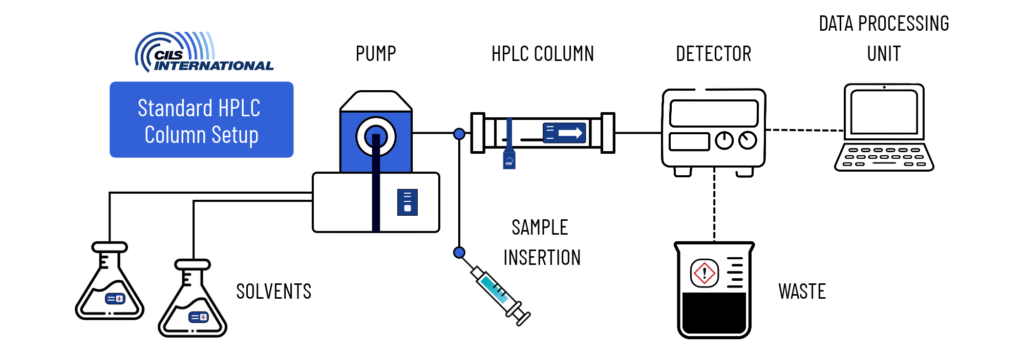
Diagram showing the main components of a standard HPLC system
An HPLC process features a broad array of components. However, few parts matter more than the column, which is where the separation itself takes place. Before reaching the column, a high-pressure pump will deliver a predetermined controlled flow of solvent through a line. Following this, an injector will introduce a sample to the continuously flowing solvent. With the sample now dissolved in the solvent, it is ready to be passed through the column.
An HPLC column contains chromatographic packing material. This material, often made of porous silica particles with chemically bonded surface groups, provides an incredibly large surface area. Different compounds within a sample interact with the column’s stationary phase to varying degrees, causing them to move through the column at different rates. In reversed-phase HPLC, the most common mode, more polar compounds generally elute first, while less polar compounds are retained longer. Normal-phase typically works the opposite way.
Differing retention through the column’s material causes certain compounds to flow slower than others. Run under fixed conditions, compounds generally leave the column at characteristic retention times, allowing analysts to help identify them by comparing against known standards. The amount of a compound can then be determined using a detector, typically by measuring its peak area against a calibration standard.
HPLC columns are extremely precise pieces of equipment, often requiring pore sizes and column dimensions to obtain accurate data across different use cases. Labs often need to switch between analytical techniques depending on an analyte’s polarity and charge. Additionally, sample volume and loading requirements can influence the diameter and other specifications of the column. These, alongside other specifications for processing involving large biomolecules or chiral separations mean that some testing labs and research bodies can have hundreds, if not thousands of columns to maintain, monitor and manage.
Labelling HPLC Columns
For smaller academic laboratories, columns may only be used on an ad-hoc basis by two or three different users. Larger commercial labs may have a huge bank of columns, used simultaneously, multiple times a day.
Of course, different organisations will require different information displayed on their HPLC columns.
Despite this, laboratories should consider recording the following information on their HPLC columns or within an associated tracking system:
– First date of use – Storage solvent – Date of last use – Flow direction – Serial number
As labs get larger or diverse in testing, more columns will likely be required to be kept onsite. As there is only so much information that can be stored on a singular column, more modern laboratories are utilising coded naming conventions for components or even barcoding/QR codes that feed into digital records or management platforms. In these use cases, lab managers may want to consider having digital catalogues of usage, cleaning records and storage locations.
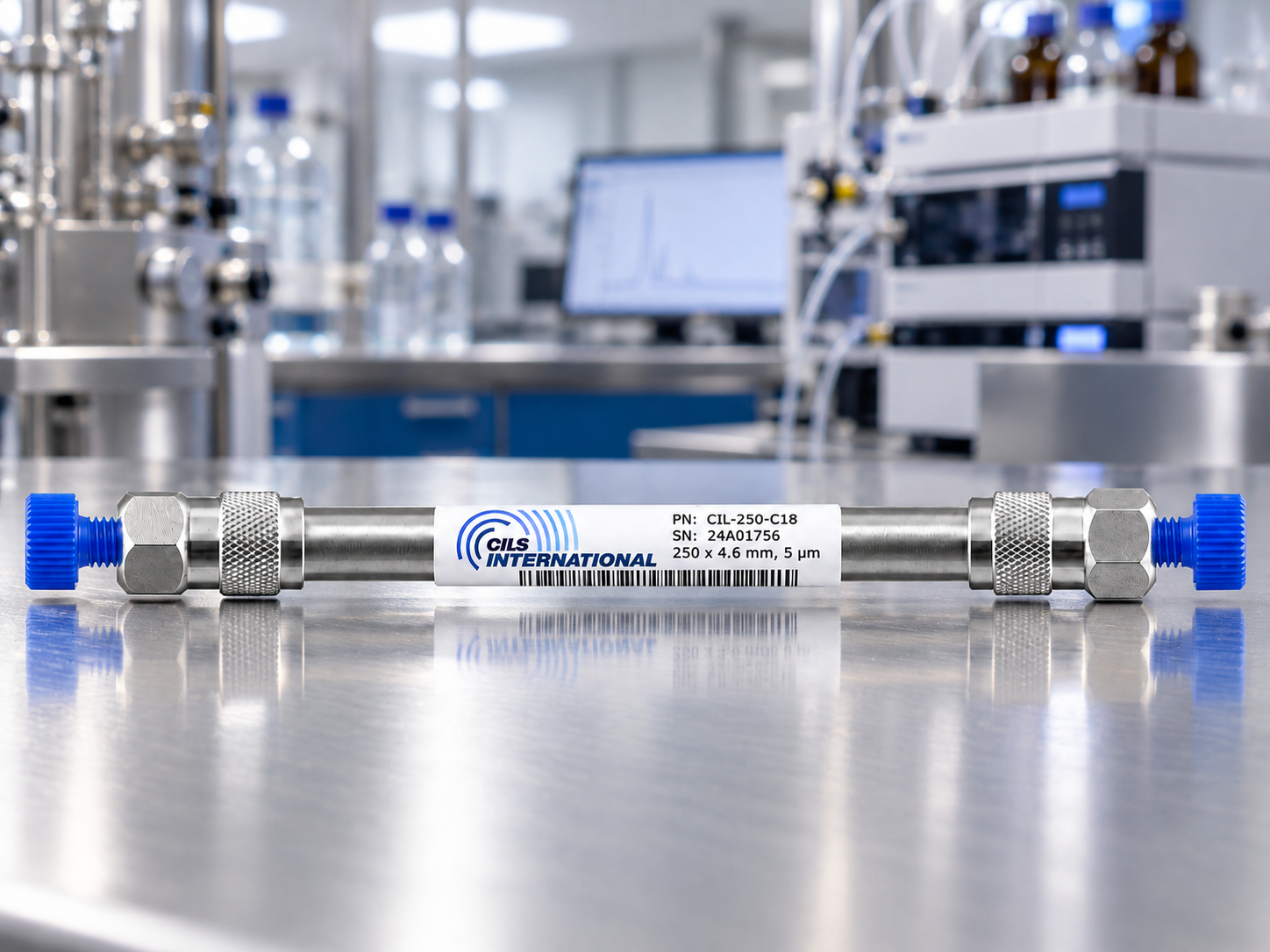
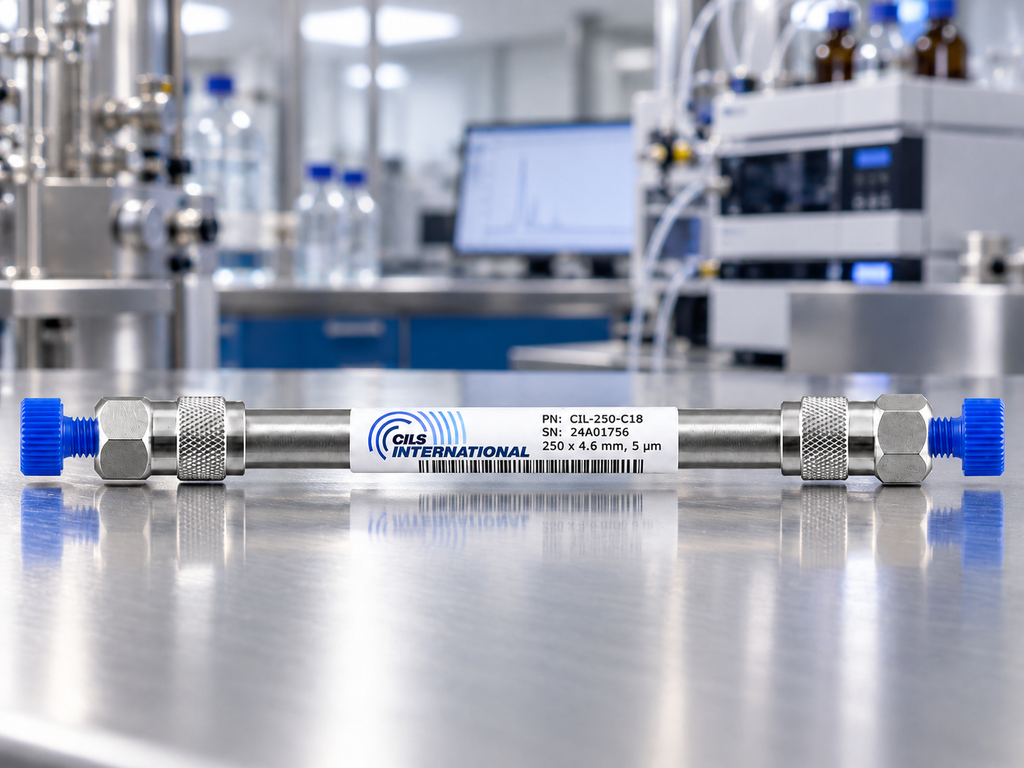
For wider columns, used across applications including preparative chromatography and certain forms of biomolecular analysis, there is often more room to adhere necessary information to the component in a way that is accessible and clear. These labels can be simply adhered to the side of the component, although due to the curved nature of columns, lab managers should consider the adhesive of their labels to avoid delamination.
For thinner columns, it is often difficult to display information on the surface that is easy to read. Once installed in the HPLC system, lab technicians should be able to see all necessary information on the label. However, this can be difficult, particularly for columns as narrow as 6 mm in diameter.
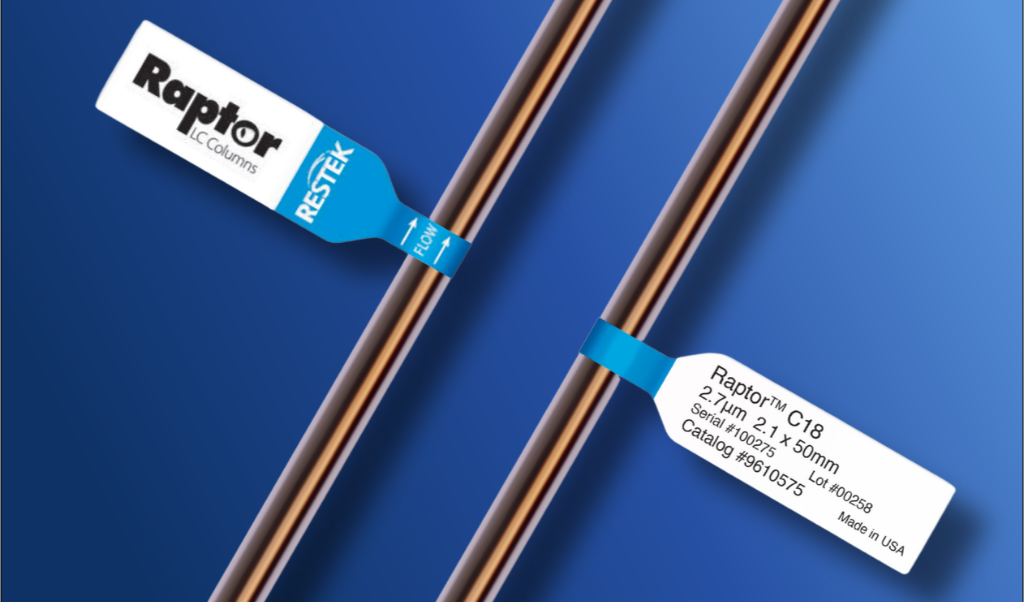
In these cases, a flag label will often be used to display relevant information – suspended from the column itself.
CILS International – Flag Label ExampleCILS International – Wrap Around Label Example
Choosing the Correct Label
HPLC processes demand a lot from their labels.
Whether it is rapidly varying temperatures, repeated handling or the use of harsh solvents, HPLC labels must withstand demanding conditions. When placed under these conditions, traditional paper labels can deteriorate or fail. In fact, even standard polyester or other plastic-based label formats can delaminate or lose print clarity following repeated cycles.
A missing or smudged label can cause missed cleaning records, solvent mix-ups or, at worst, spoiled batches, false readings and premature column replacement. In our experience, having worked with laboratories for decades on the implementation of durable labels specifically for HPLC columns, there are three key sources of label failure within this process.
– Temperature – Solvent contact – Repeated handling
Temperature
Although some HPLC runs happen at a controlled room temperature, many processes require specific environmental conditions to produce accurate results. Column ovens hold columns at a set point, often between 30 and 60°C, with some processes requiring even higher temperatures. Some columns can also move between a warm oven, a cool bench and a cold storage fridge, sometimes in a single day. Each swing makes the label, and its adhesive expand and contract at different rates.
Some standard adhesives can soften under heat and creep, resulting in curled edges or labels shifting on the barrel. Low temperatures can also affect adhesive performance and make certain label materials brittle, potentially causing the edges to lift. A label for this form of analysis often needs an adhesive that holds its bond across the full range of temperatures and a face stock that stays stable through numerous cycles.
Solvent Contact
Acetonitrile, methanol and, in certain applications, isopropanol, ethanol and tetrahydrofuran (THF) are among the solvents used in HPLC workflows. Unfortunately, fittings weep and waste lines drip. A column label may repeatedly come into contact with these solvents due to trace residues from manual handling, cross‑contamination, and the unintentional contact mentioned above.
Solvents attack labels in two ways. They can dissolve or smear ink or can creep under the label edge to break down the adhesive. THF is especially harsh and will wreck many plastics. A suitable label pairs a solvent-resistant face material with a compatible print method, such as thermal transfer with an appropriately selected resin ribbon, and an adhesive that can withstand exposure to the solvents used. Without all three, text is prone to blurring and substrates can begin to peel.
Repeated Handling
Columns can regularly pass through many hands. Analysts load them, swap them, flush them, log them and store them, and they often do so in gloves that carry solvent residue, dust or other foreign substances. Alongside the introduction of foreign substances, repeated pressure and friction can cause unsuitable labels to fold, smudge or even tear. Durable labels use tough, scratch-resistant surfaces, especially when paired with a protective overlaminate, helping printed information remain legible throughout the component’s working life.
Our Solution
To combat these elements, CILS has formulated a label range, specifically designed to resist against common label failure sources associated with HPLC processes. Our CILS-8100HTTN/PG9 material features a specially designed solvent-resistant surface that remains clear and legible, even after exposure to methanol, ethanol, acetone, isopropyl alcohol (IPA) and tetrahydrofuran (THF).We will also recommend and supply the most appropriate printing ribbon to ensure that any information printed onto the label is equally resistant to solvent exposure.
Available both preprinted and as a blank roll, speak to one of our team today if you would like to learn more.
Request a Sample
CONTACT US
We are computer printable label specialists. Pure and simple.
With nearly 40 years of expertise, our tried-and-tested approach will diagnose the right label for your unique needs. We have built our reputation on consistently creating the highest quality durable labels with excellent customer feedback.



 French
 German
 US English