
Choose your industry sector:
19 Mar 2026
Author: Thomas Cowling
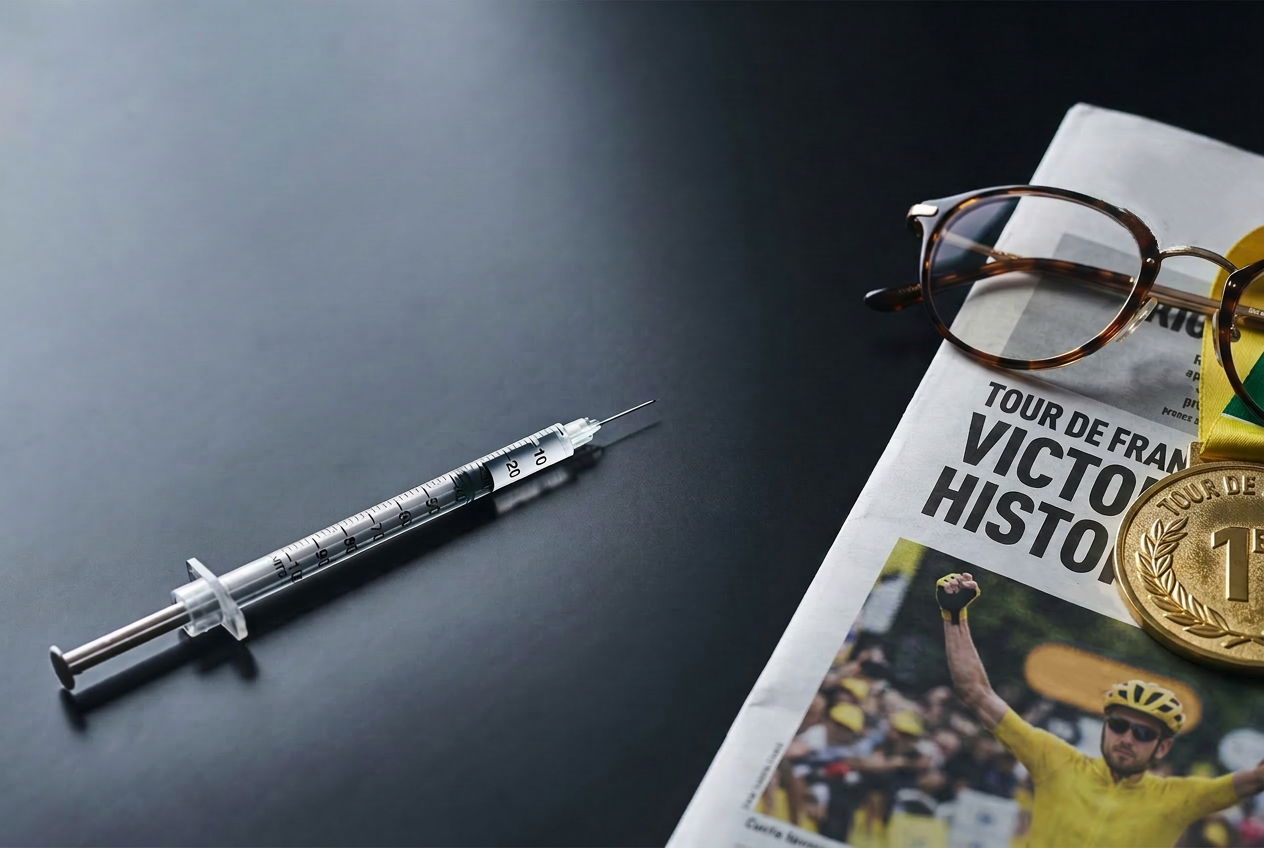
The worlds of cycling and laboratory chemistry have been closely intertwined since the sport’s earliest professional era. By the late 19th century, endurance riders were already experimenting with stimulants such as caffeine, cocaine and strychnine to combat fatigue in ultra-long races like Bordeaux–Paris. The death of Welsh cyclist Arthur Linton in 1896 was cited by some historians as the earliest suspected doping-related death in sport, although most now believe it was related to typhoid fever.
Drug use in the earlier iterations of the Tour de France was so normalised that the 1930 rider’s rule book politely reminded riders that drugs would not be provided by the organisers and would have to be brought along by teams themselves. Following the high-profile death of Danish rider Knud Enemark Jensen at the 1960 Rome Olympics, the tide finally turned. By 1965, French sports regulators had formalised the world’s first anti-doping laws, marking the beginning of the end for the ‘anything goes’ era of the sport.
Looking forward to the modern day, doping has unfortunately become synonymous with professional cycling, thanks to numerous high-profile cases of illegal performance enhancement. With the sport now in advanced recovery from the doping-related scandals of the noughties, another controversy could throw the world of cycling back into PR freefall. This is why today’s testing centres are ticking every possible box to ensure that foul play isn’t possible within lab testing.
When discussing professional cycling, it is hard not to discuss the sport’s flagship event, the Tour de France. At the event, anti-doping protocol is rigorous, with targeted tests conducted both before and throughout the three-week race’s schedule. The almost 1,000 samples (both blood and urine) collected from race leaders, stage winners and other riders as required are kept for up to 10 years by testing agencies to help support future testing and biological passporting.
Despite the extremely strict chain of custody protocols in place, sporting regulators unfortunately must assume that the teams they oversee are seeking opportunities to bypass their testing security, be that before testing, during collection, or perhaps even in transit.
Take the real-world example of how the World Anti-Doping Agency’s investigations found that samples contained within tamper-proofed vials had been accessed and resealed by FSB agents during the 2014 Sochi Winter Olympics. This deliberate act of tampering left no sign of scratches or marks to the naked eye, requiring thorough investigation to be discovered. Cases like this can cast doubt over the legitimacy of sporting results and ultimately present an injustice to participants taking part in good faith.
This is why testing agencies, both within cycling and other sporting fields, have begun working with CILS to provide that crucial final step in securing their sample testing protocols.
Modern anti-doping laboratory protocols rely on chain-of-custody documentation, secure sample transport, anonymised identification and controlled access environments to minimise interference risks. Despite this, doping-testing facilities worldwide also utilise physical methods in the form of tamper labels to prevent sample interference.
Tamper-evident labels provide an essential additional safeguard across the multi-stage handling process implemented by organisations such as the International Testing Agency (ITA), where samples move from collection sites through couriers, receiving labs and multiple analysts before testing finalisation and storage.
To minimise corruption and bias, cycling’s testing protocols intentionally prevent any one person from overseeing a sample from collection to result. Although an undoubtedly necessary step, this separation of duties also creates a degree of risk as no individual can verify every stage of the process. This is often why tamper-proof containers and labels are used to act as a replacement for human oversight by unambiguously indicating whether a sample is valid. This represents the cherry on top of a legally binding cake for organisers, showing to regulators and the potentially accused that at no point during transit, aliquoting, or short-term storage has a sample been interfered with.
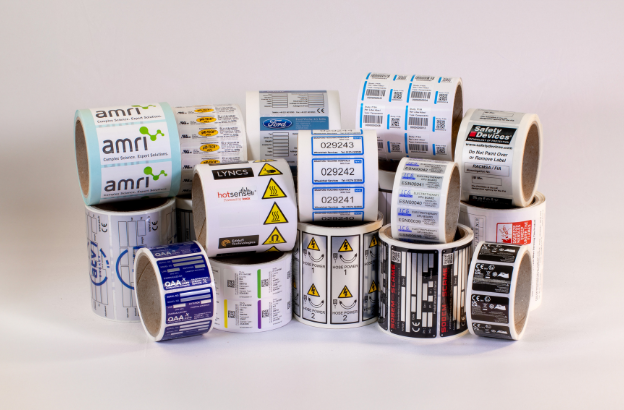
Tamper-void materials work through irreversible physical or chemical changes. Examples include pressure-sensitive adhesives that fracture on attempted removal, leaving patterned residue like “VOID” on both the label and substrate, films which shatter into non-realignable fragments or holographic layers that distort irreversibly under stress. These irreversible physical changes provide the forensic proof needed to defend a clean athlete or confirm a violation with relative certainty.
These constructions appear in other high-stakes sports testing as well. Football urine samples often use void-evident labels to prove integrity during chain-of-custody reviews, tennis blood vials employ frangible seals for international shipment and boxing post-fight panels rely on patterned adhesive residues to withstand legal scrutiny. In each case, the label’s failure mechanism delivers objective evidence that supports the results.
In the dangerous, high-octane world of professional cycling, overseeing bodies are doing all they can to claw back the sport’s reputation from its darkest hour. As label manufacturers, we play a quiet but critical role in this pilgrimage, ensuring that samples can be trusted and bad actors can be held accountable.
Need tamper-evident labels for your laboratory?
Visit our dedicated product page to explore specifications, materials and more examples of use cases.

We are computer printable label specialists. Pure and simple.
With nearly 40 years of expertise, our tried-and-tested approach will diagnose the right label for your unique needs. We have built our reputation on consistently creating the highest quality durable labels with excellent customer feedback.
TEL: 0800 917 0024
Email: info@cils-international.com